
General Urology
Spermatocele & Epididymal Cysts
Benign cysts of the epididymis are common, but when they grow large enough to cause discomfort or concern, surgical removal offers a safe, effective solution.
Schedule a ConsultOverview
What is a Spermatocele?
A spermatocele (also called an epididymal cyst) is a benign, fluid-filled cyst that forms in the epididymis — the coiled tube located behind the testicle that stores and transports sperm. They are among the most common causes of a scrotal lump and affect men of all ages.
Most spermatoceles are small, painless, and discovered incidentally during a self-exam or ultrasound. However, some can grow large enough to cause scrotal heaviness, discomfort, or cosmetic concern. When this occurs, surgical removal (spermatocelectomy) provides definitive relief.
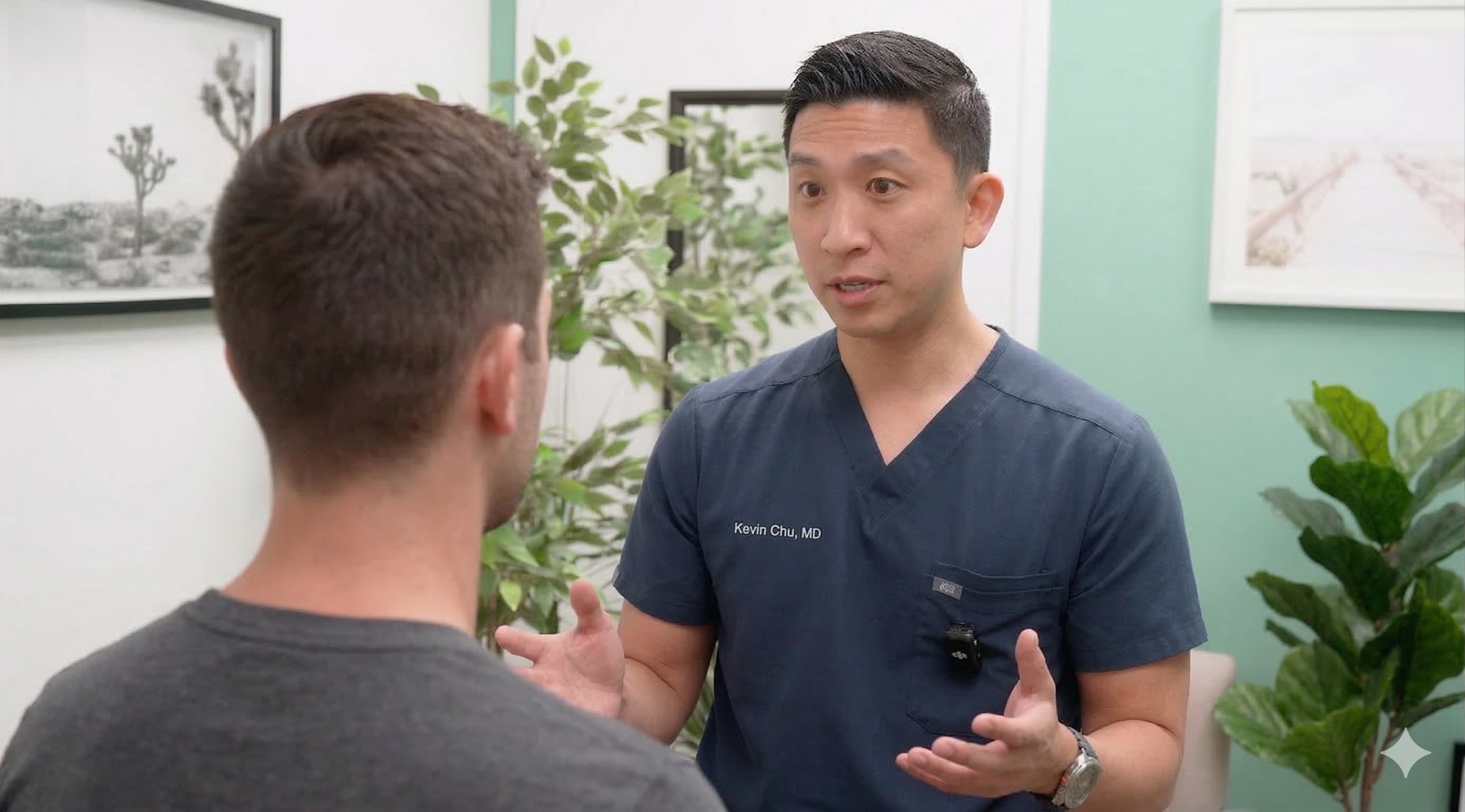
Expert Diagnosis and Surgical Care
Symptoms
Signs & Symptoms
- A smooth, separate lump felt above or behind the testicle
- Scrotal heaviness or pressure, particularly with larger cysts
- Mild aching or discomfort in the scrotum
- Visible scrotal enlargement or asymmetry
- Often discovered incidentally — many cause no symptoms at all
Diagnosis
How We Diagnose It
Diagnosis begins with a physical examination — a spermatocele typically feels like a smooth, separate lump behind or above the testicle. To confirm the diagnosis and rule out other conditions, a scrotal ultrasound is performed. Ultrasound reliably identifies cysts, confirms their benign nature, and distinguishes them from varicoceles, hydroceles, or testicular masses.
Treatment
Treatment Options
Observation (Watchful Waiting)
Most spermatoceles do not require treatment. If the cyst is small and asymptomatic, periodic monitoring with or without repeat ultrasound is a reasonable approach.
Spermatocelectomy
Outpatient surgical removal of the cyst through a small scrotal incision. The procedure typically takes less than one hour under general or regional anesthesia. It is the only definitive treatment that eliminates the cyst entirely.
Process
What to Expect
Consultation
We review your symptoms, medical history, and imaging to confirm the diagnosis and discuss your options.
Ultrasound Confirmation
Scrotal ultrasound confirms the cyst and rules out other causes of scrotal swelling.
Outpatient Procedure
Spermatocelectomy is performed under general or local anesthesia through a small incision in the scrotum. You go home the same day.
Recovery
Return to light activity in 2–3 days. A follow-up visit within 1–2 weeks confirms healing. Full activity resumes within 1–2 weeks.
Return to Work
Non-strenuous work within 2–3 days
Activity Restriction
Avoid heavy lifting for 1–2 weeks
Full Recovery
Expected within 1–2 weeks
FAQs
Frequently Asked Questions
Is a spermatocele dangerous?
No — spermatoceles are benign cysts and do not become cancerous. However, they should be evaluated by a urologist to confirm the diagnosis, as other scrotal masses can occasionally be more serious.
Do spermatoceles go away on their own?
Most spermatoceles are stable and do not require treatment. Small, asymptomatic cysts can simply be monitored over time. They rarely resolve on their own but also rarely cause significant problems.
When is surgery recommended?
Surgery (spermatocelectomy) is recommended when the cyst becomes large enough to cause discomfort, heaviness, or cosmetic concern — or when it interferes with daily activities. Aspiration alone is generally not recommended, as the cyst typically refills.
Will surgery affect my fertility?
Spermatocelectomy carries a small risk of affecting the epididymis, which plays a role in sperm maturation and transport. This risk is discussed in detail during consultation. For men who have not yet completed their family, the risks and benefits are carefully weighed.
What is recovery like after spermatocelectomy?
The procedure is performed as an outpatient under general or local anesthesia. Most patients return to light activity within 2–3 days and resume full activity within 1–2 weeks. A follow-up visit is scheduled to confirm healing.
How is a spermatocele different from a varicocele or hydrocele?
A spermatocele is a cyst attached to the epididymis, typically felt as a small, smooth lump separate from the testicle. A varicocele is an enlargement of the veins within the scrotum. A hydrocele is a fluid collection surrounding the testicle. Scrotal ultrasound reliably differentiates these conditions.
Why Us
Why Choose Dr. Kevin Chu?
- Board-certified, fellowship-trained urologist specializing in scrotal and testicular conditions
- Careful assessment of fertility implications before recommending surgery
- Privacy is a priority — discreet office ensures a comfortable experience
- Free parking and easy scheduling at our Redondo Beach location